When I lived in Phoenix thirty years ago, I didn’t go to many other places around the state. Inevitably, I visited the Grand Canyon and Sedona, but nowhere else. My mom and I drove down to Tucson but promptly turned around halfway through because one of those monsoon storms Arizona is notorious for hit Interstate 10. Later, we took a day trip to Biosphere 2, just outside the city, which was fascinating but a bit touristy.
So, I had never really been to Tucson, but I knew a few things about it and was intrigued enough to see it one day. Well, that day was last week, when RAS and I flew down for two days and explored the area. We had a general plan to go to Saguaro National Park and dine at a couple of Mexican restaurants, as it is a UNESCO City of Gastronomy, one of just two in the country (the other is one I’ve been to before, San Antonio). We just weren’t sure which ones we would choose.
Thanks to RAS’s friend’s son, who lived in the city for two years, we had a list of restaurants to choose from. I also kept my own in mind, thanks to another “Top Chef” season where one of the participants was from Tucson. We also figured out another place to visit, which turned out to be worth the long drive.
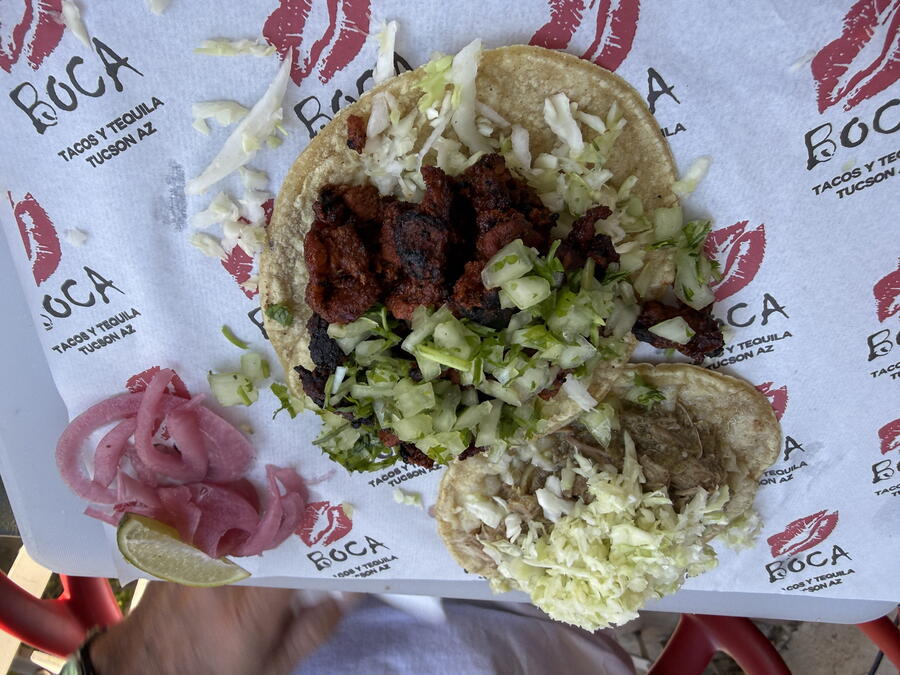
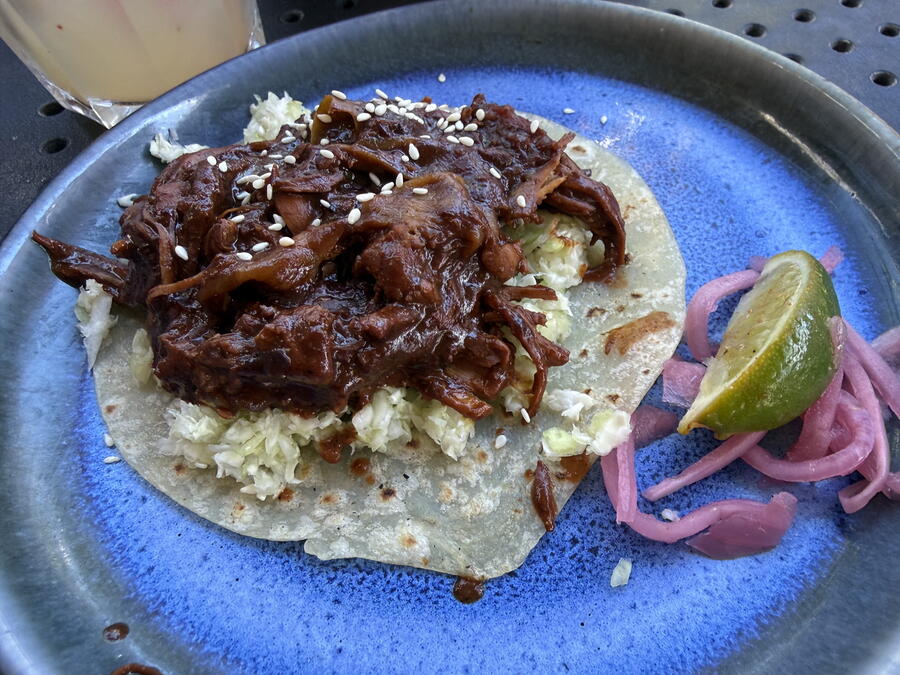
Boca by Chef Maria Mazon
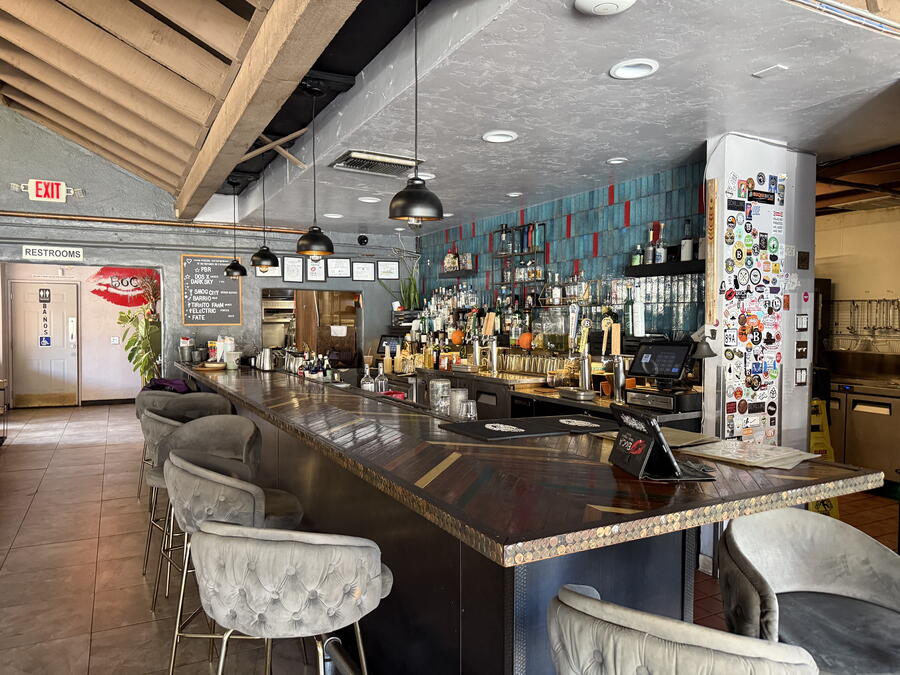
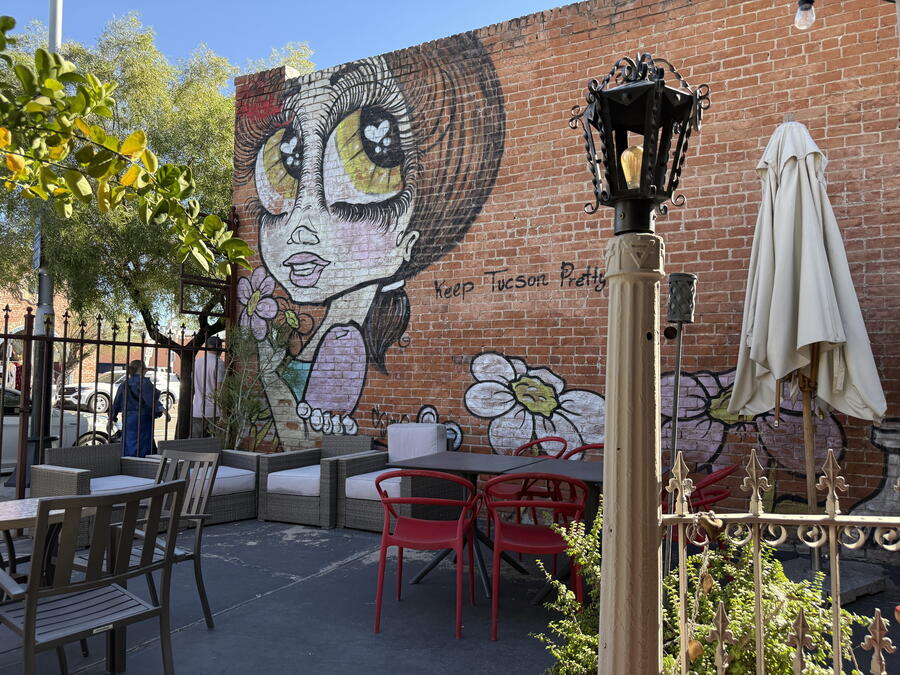
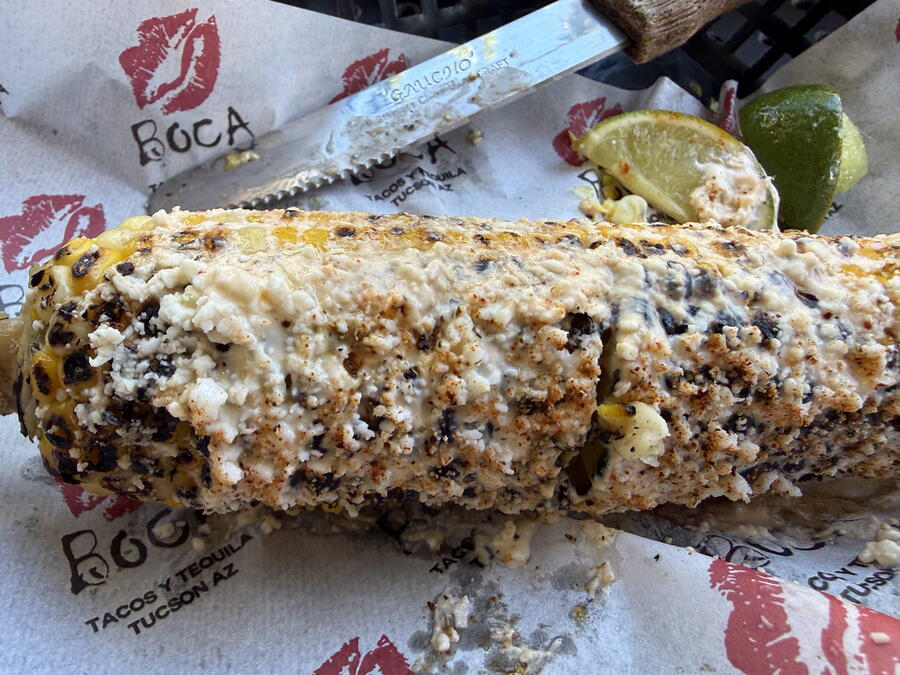
This casual restaurant on the city’s historic Fourth Avenue is from “Top Chef” contestant Mazon, who splits time between Tucson and Sonora, the Mexican state adjacent to Arizona. I think both places fuel the creativity that’s evident in her dishes. RAS and I took longer than anticipated to choose which of the eighteen tacos we wanted for lunch. While he decided on carne asada and puerco verde, I defaulted to one of my favorites – mole de pollo and an elote (Mexican street corn).
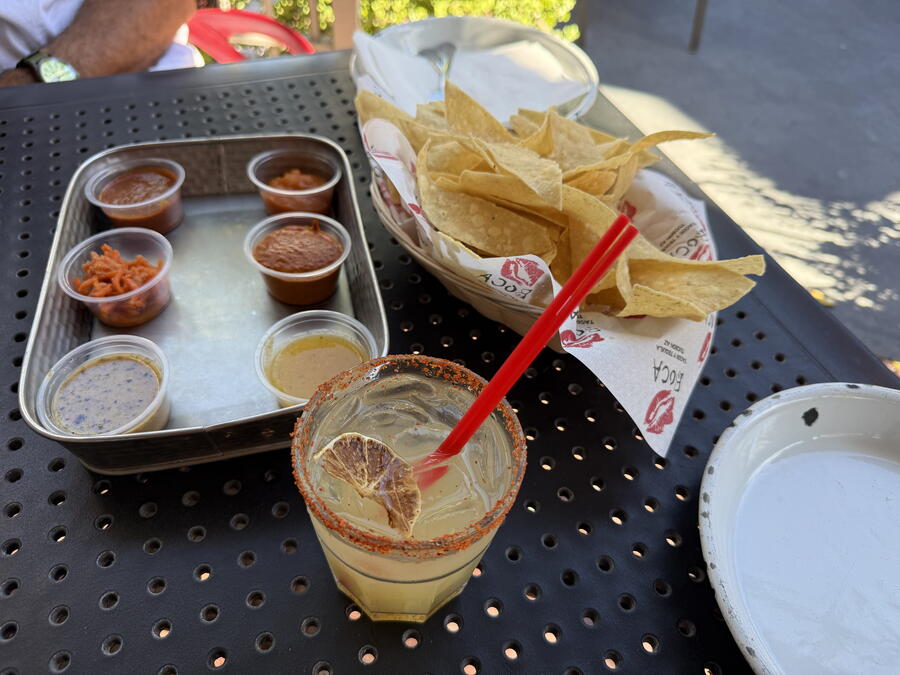
While these tacos were excellent, grilled and accompanied by deeply flavored marinade or sauces (my mole was especially piquant and complex), it was the salsas that came with our chips that were a revelation. We sampled six altogether, most of them incorporating chipotle or other chiles, roasted tomato or tomatillo, mango, pineapple, nuts, spices and even soy sauce. The one with that last ingredient was my favorite, and that was something I wasn’t expecting. The only problem is these salsas are unlikely to be available if you come and visit, because they’re always changing.
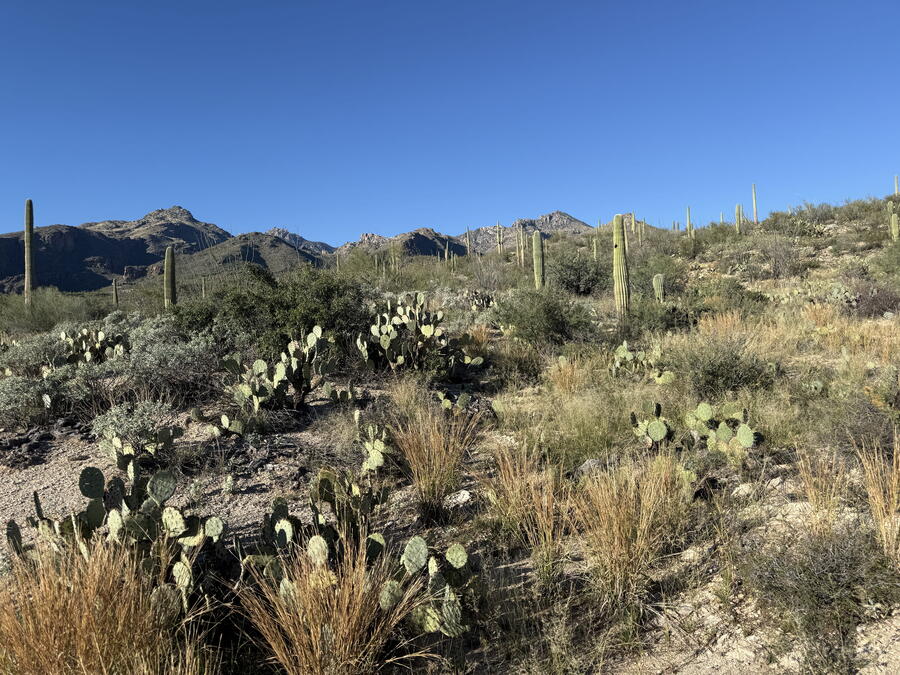
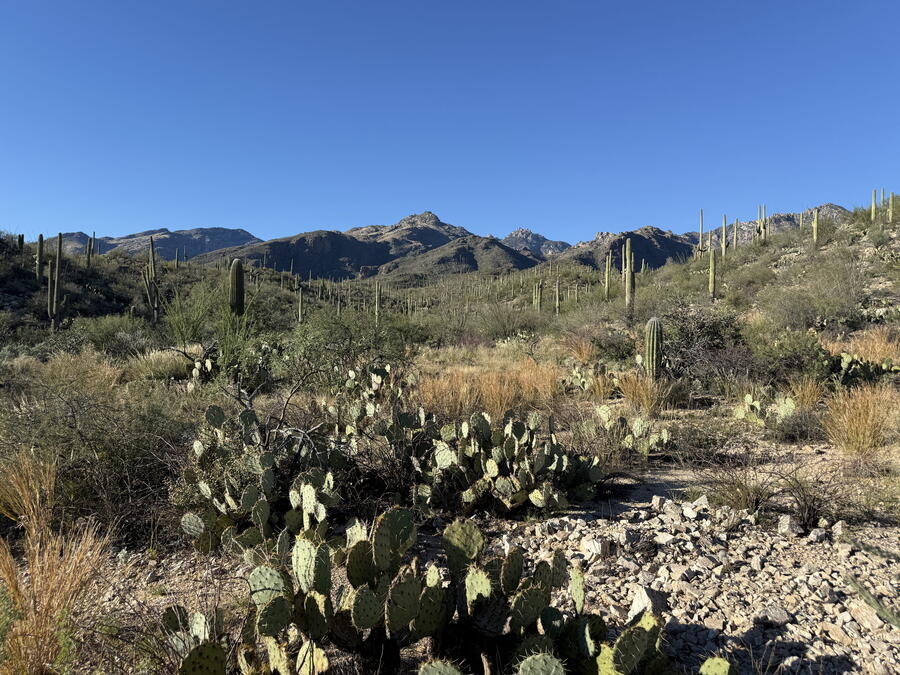
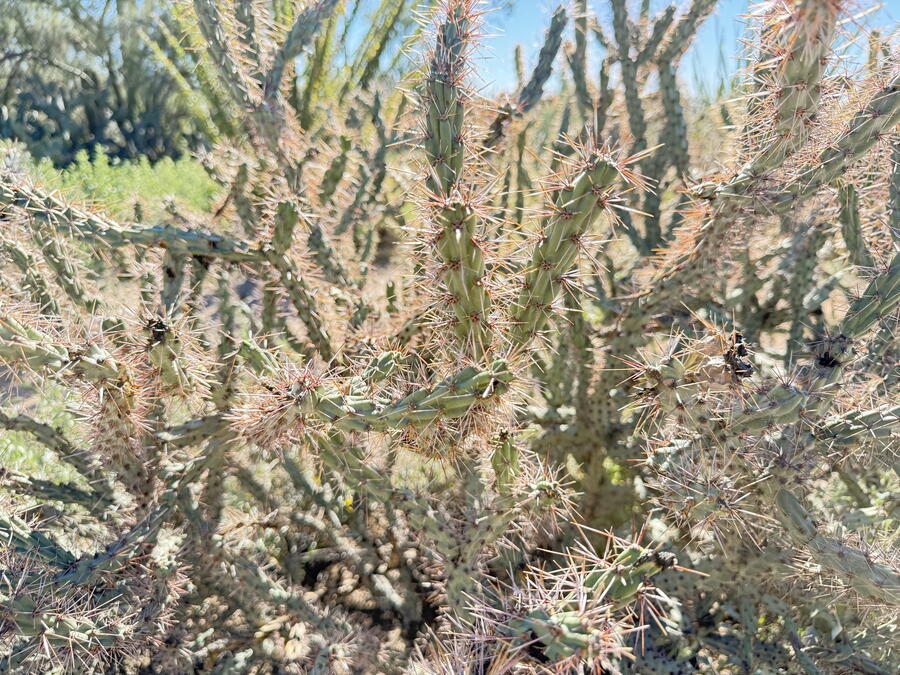
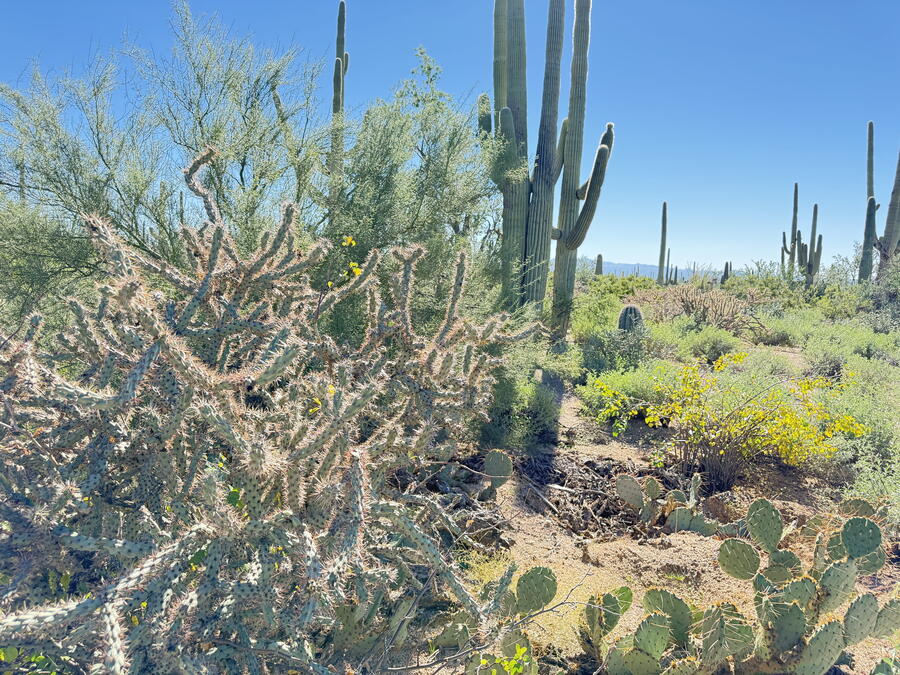
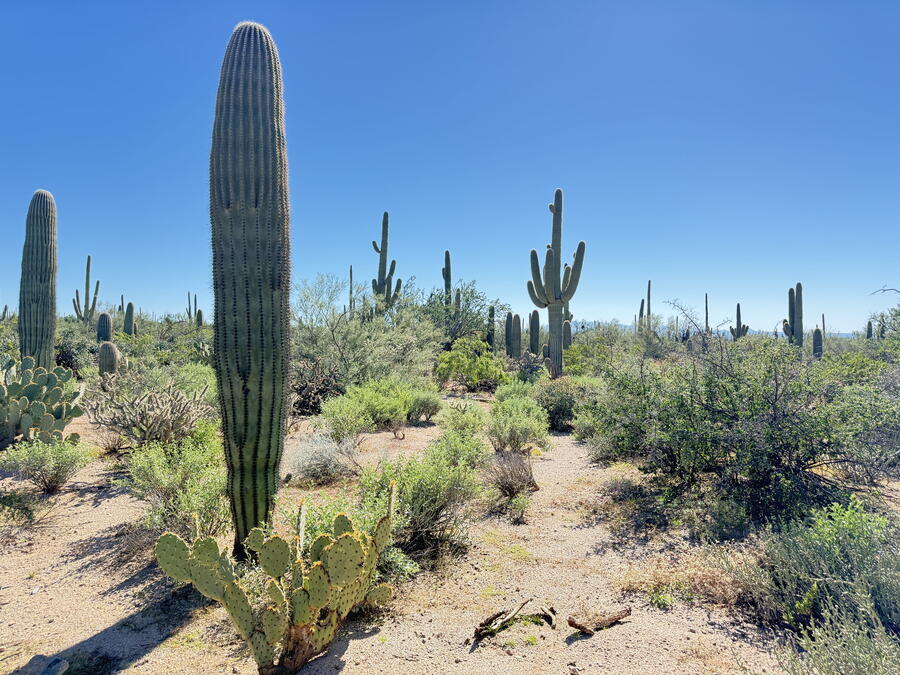
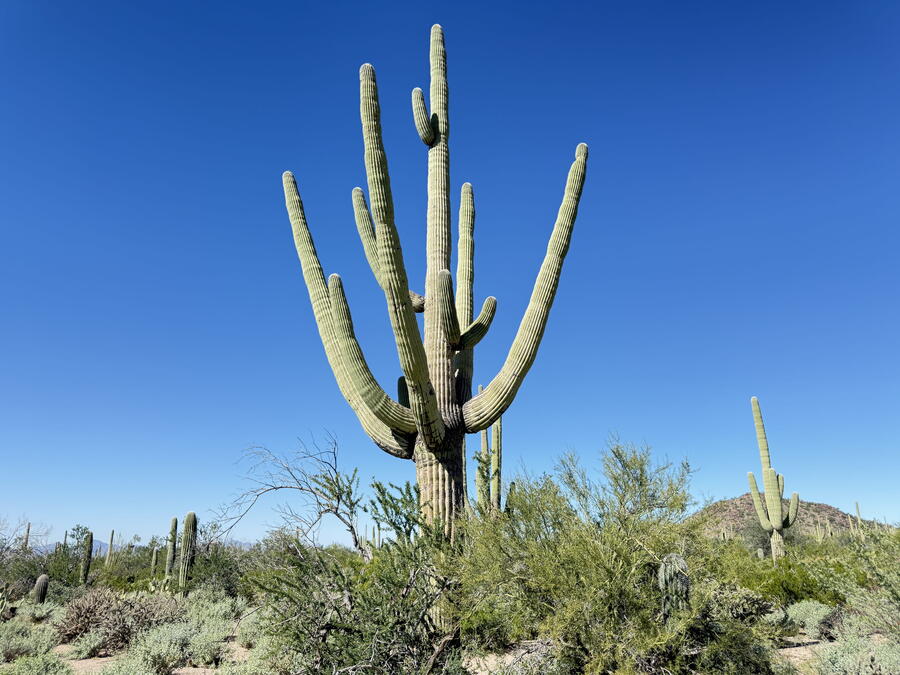
Sabino Canyon/Saguaro National Park
When anyone arrives in Tucson, they will notice one prominent feature of the landscape: the saguaro. This is the largest cactus species, growing primarily in southern Arizona and northern Mexico; it can reach 50 feet and live 200 years. It’s also probably one of the most prolific ecosystems, providing food, water and shelter for over 100 desert-dwelling species as well as humans. Indigenous tribes would rely on saguaro for sustenance and construction.
In these two places we visited, we didn’t spend much time because our visit was abbreviated. Sabino Canyon is a recreational area, while Saguaro is a National Park, but they are similar in their appearances. Each has a network of trails and a visitor center that gives overviews of the park. I think we might have stayed longer at both, but we didn’t have a clear plan on where to go. A mile-long discovery trail at Saguaro offers a great overview of the park’s flora and fauna, with detailed descriptions of what you can see.
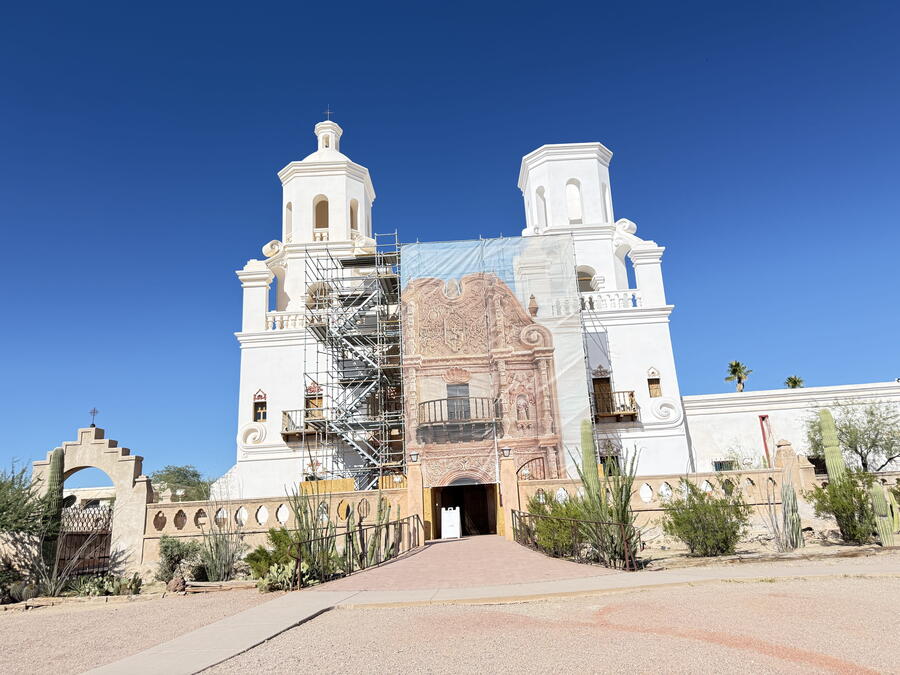
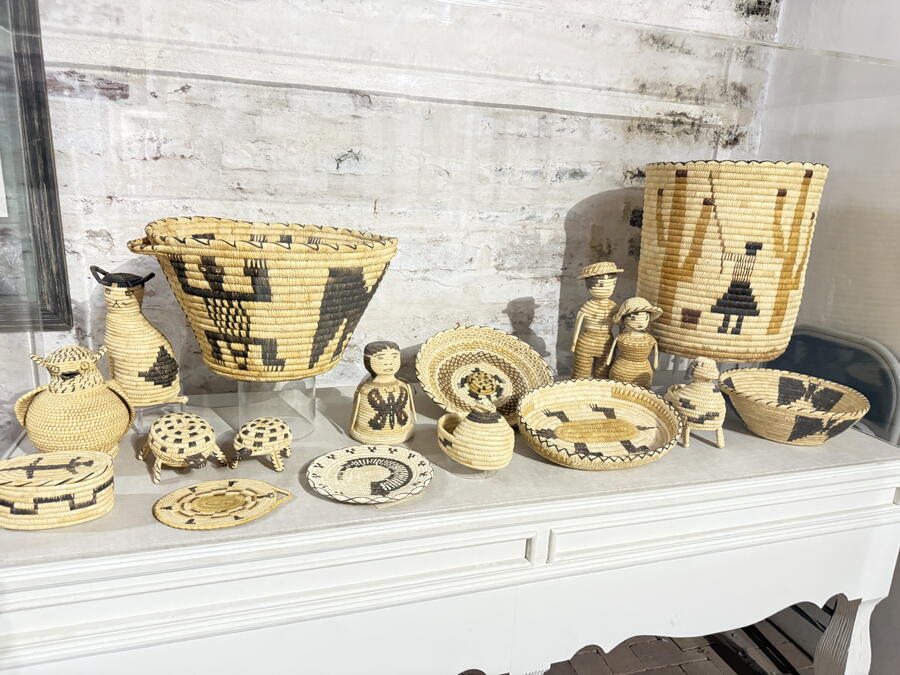
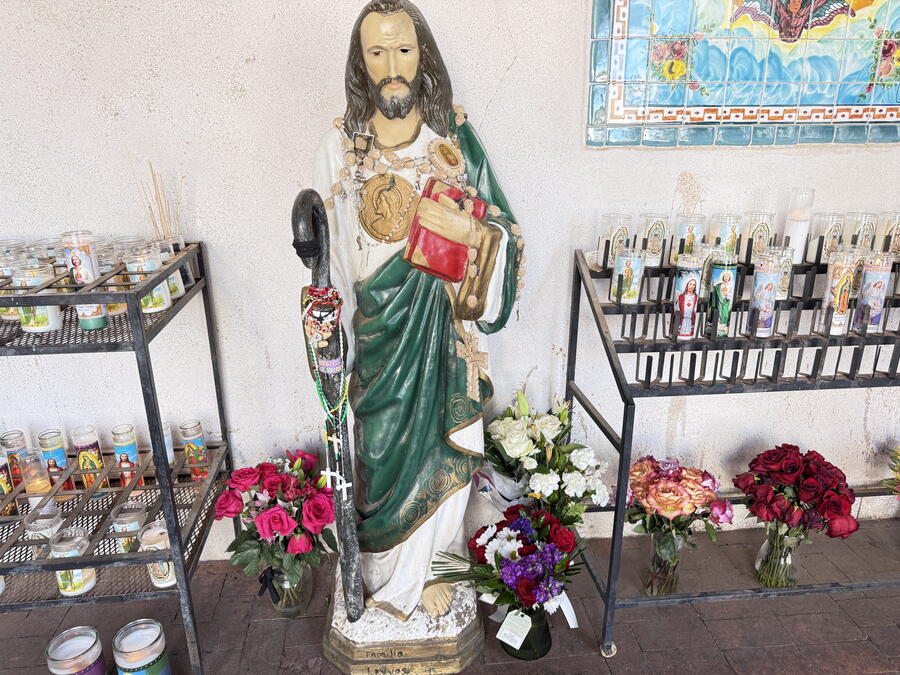
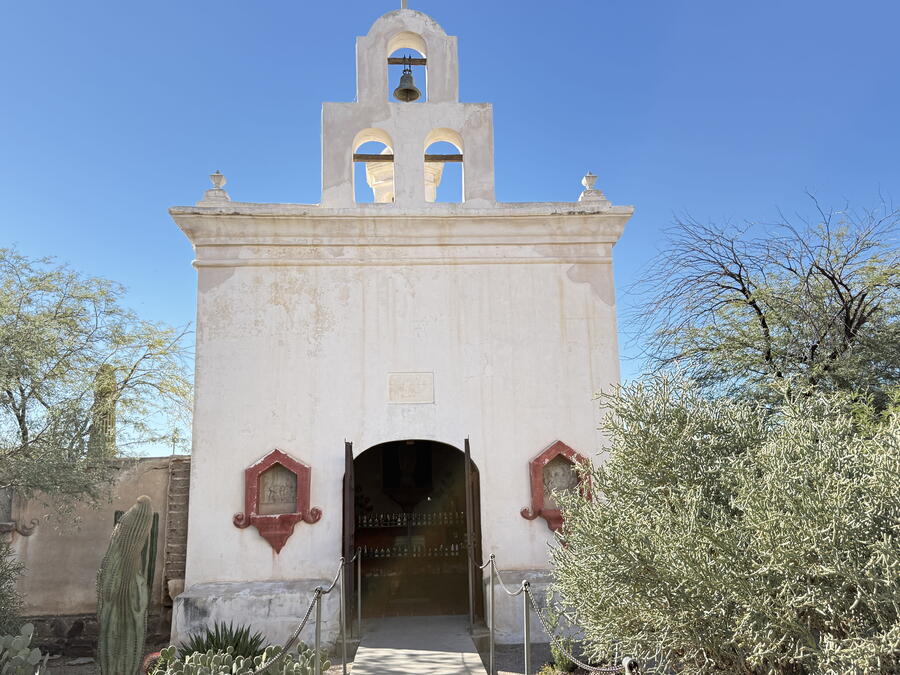
Mission San Xavier del Bac
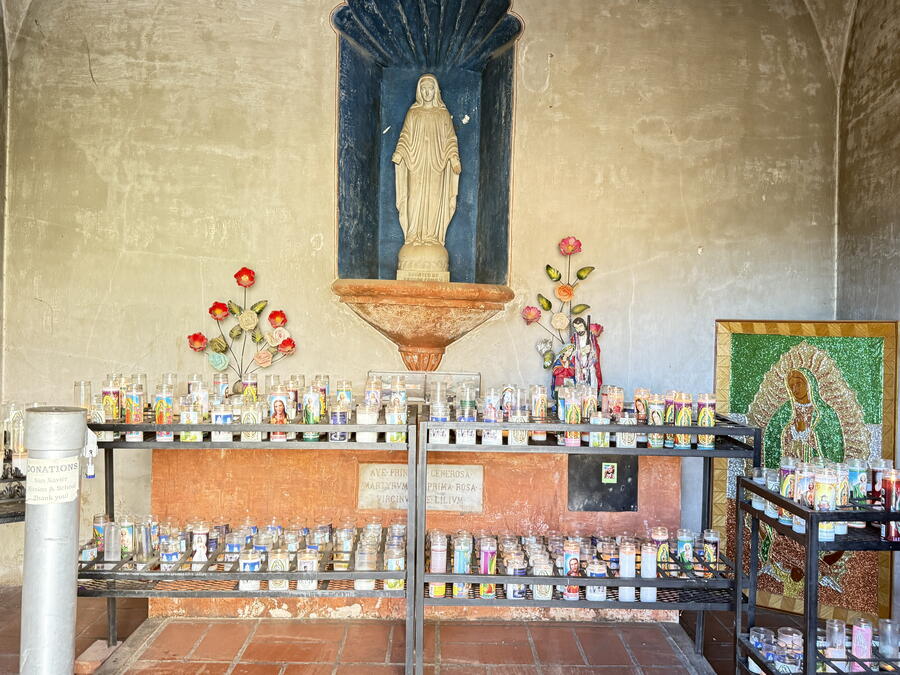
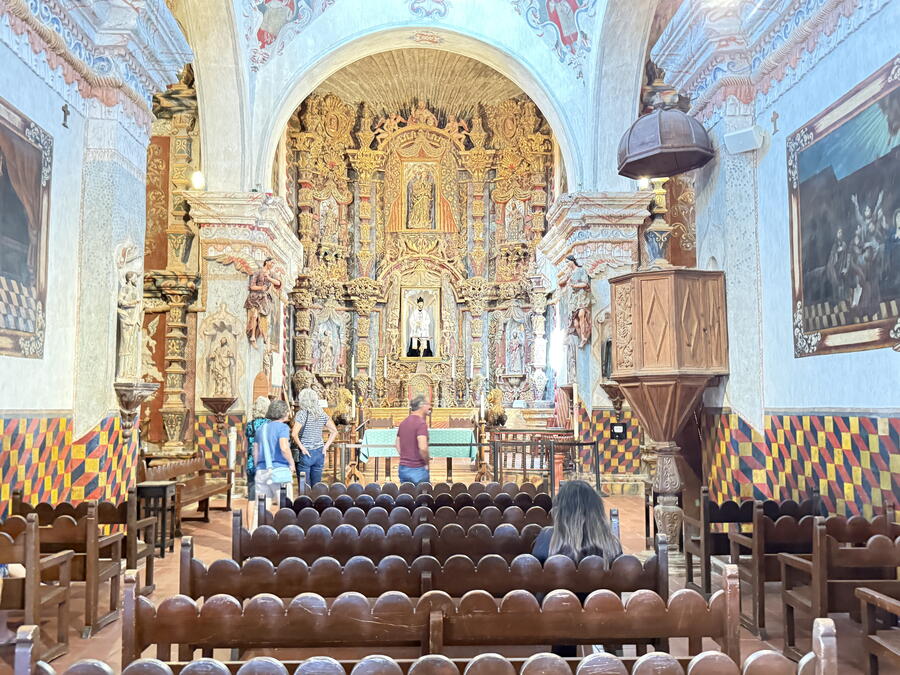
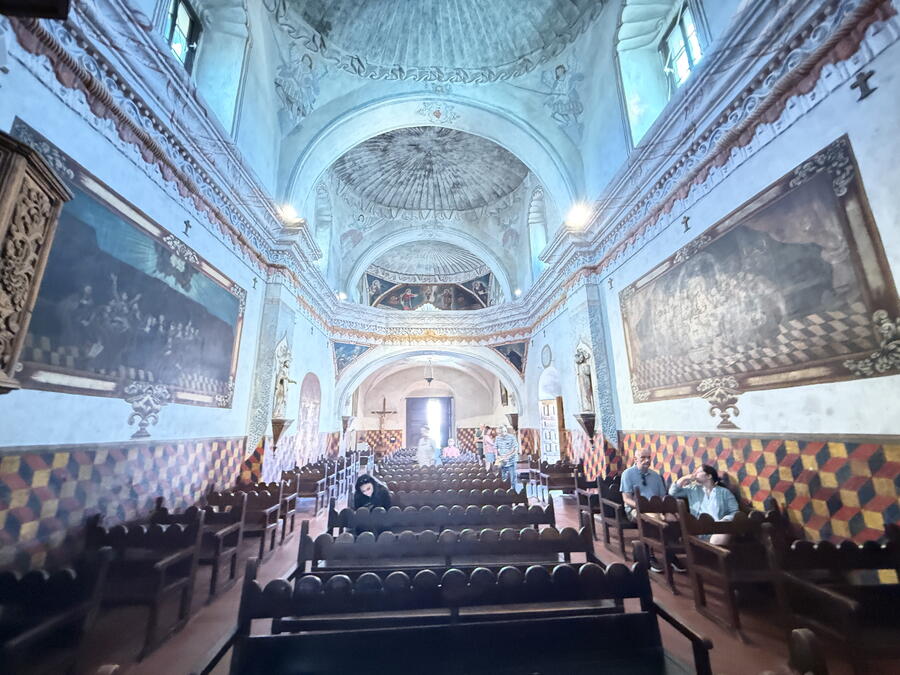
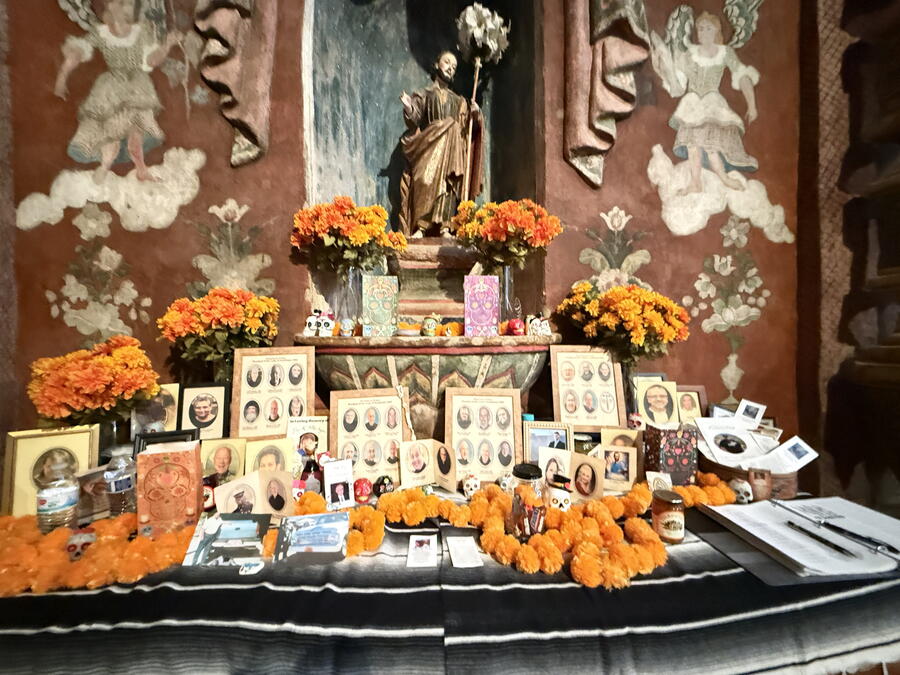
One of the few intact missions in the Southwest, San Xavier was founded in 1692 by Spanish priest Father Eusebio Kino, who wished to bring Christianity to the indigenous people, particularly the Tohono O’odham. Later, construction began on the grand white clay, brick and lime mortar structure that exists today, including the uncommon Spanish colonial feature of vaulted roofing. A cross section of the walls shows how thick they were, probably to act as natural insulation against the oppressive desert heat.
Inside the chapel, you can see Baroque elements, statues and murals that depict scenes of early Christianity. I was surprised by how elaborate these works were, rivaling those I’ve seen in Catholic churches in Europe. Since we visited during lunchtime and were still full from our substantial breakfast, RAS and I shared a plain fry bread from a makeshift stand outside the church grounds. That is certainly one thing we can’t get around the cathedrals in Europe.
El Charro
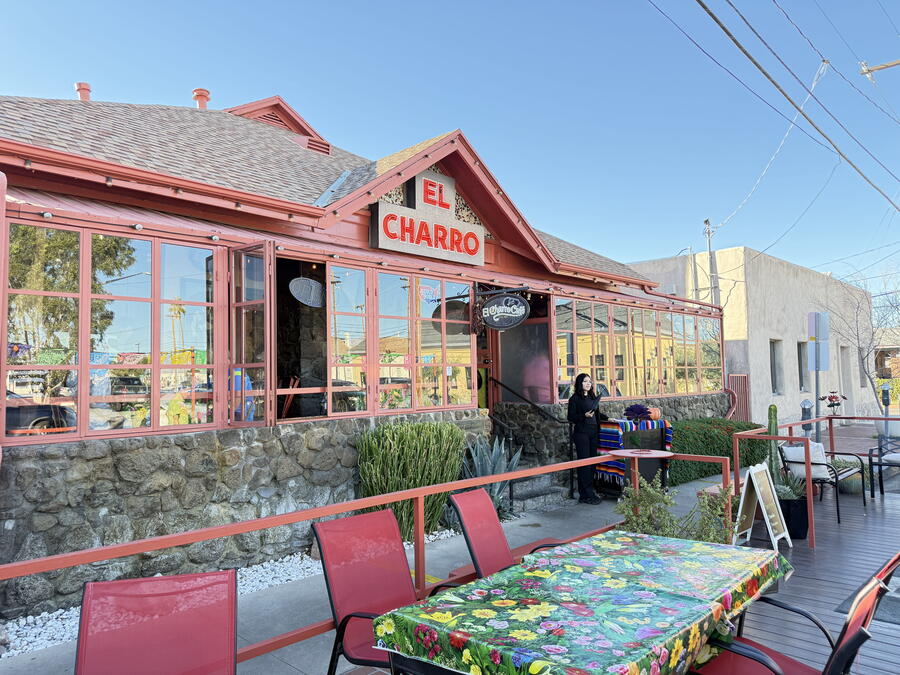
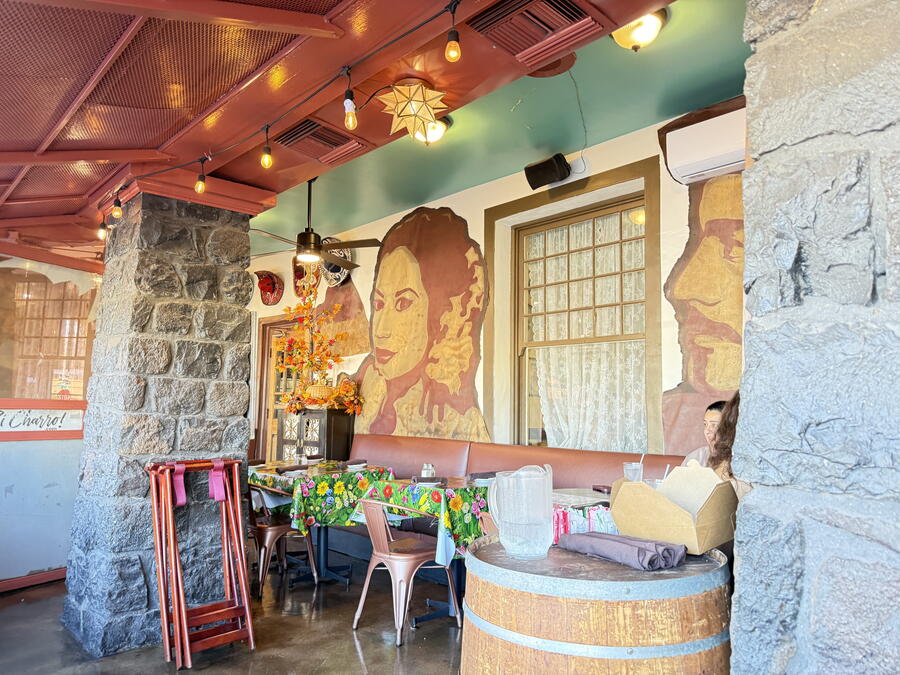
I always appreciate visiting a historic or long-standing establishment, and this downtown institution fits the bill. “Tia” Monica Flin, a native of France, arrived in Tucson with her family, adapted the local Sonoran cuisine and made it her own. The restaurant has been in the same location for 104 years and is the oldest family-owned and operated in the country. Like Boca, El Charro earned an official City of Gastronomy designation, and I tried one of the dishes specifically given this honor.
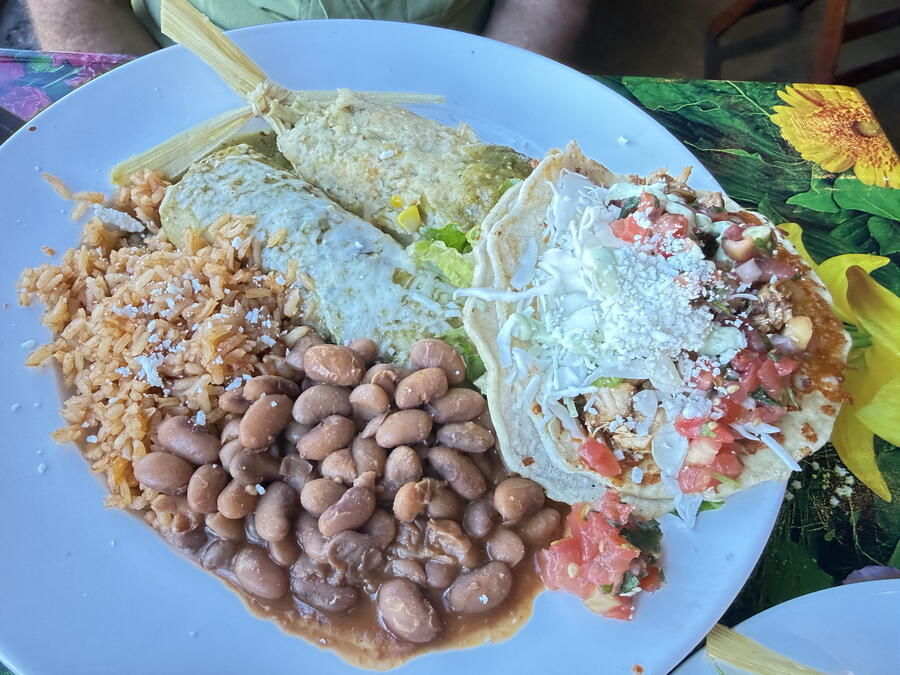
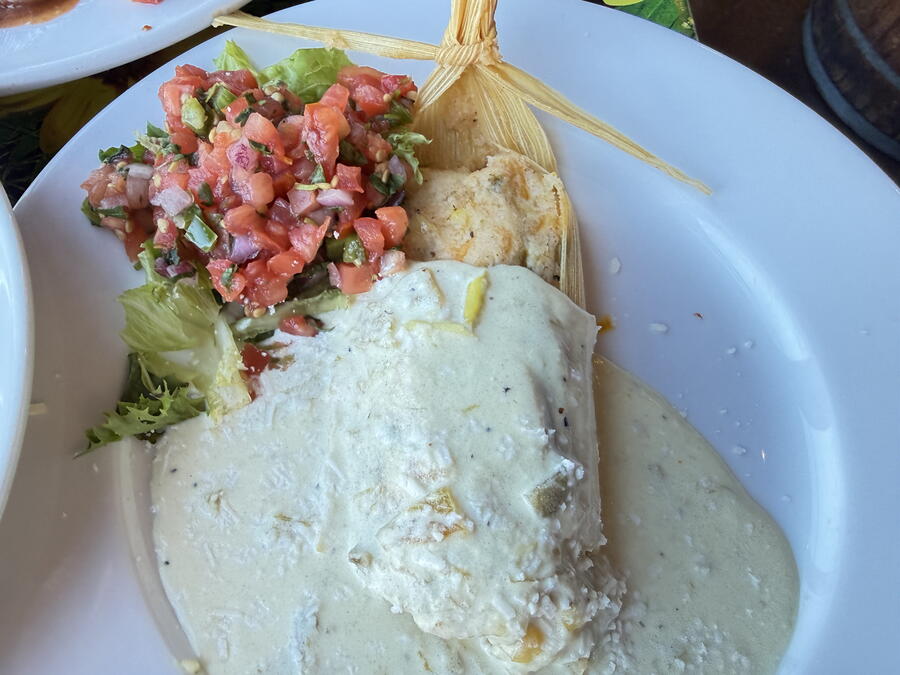
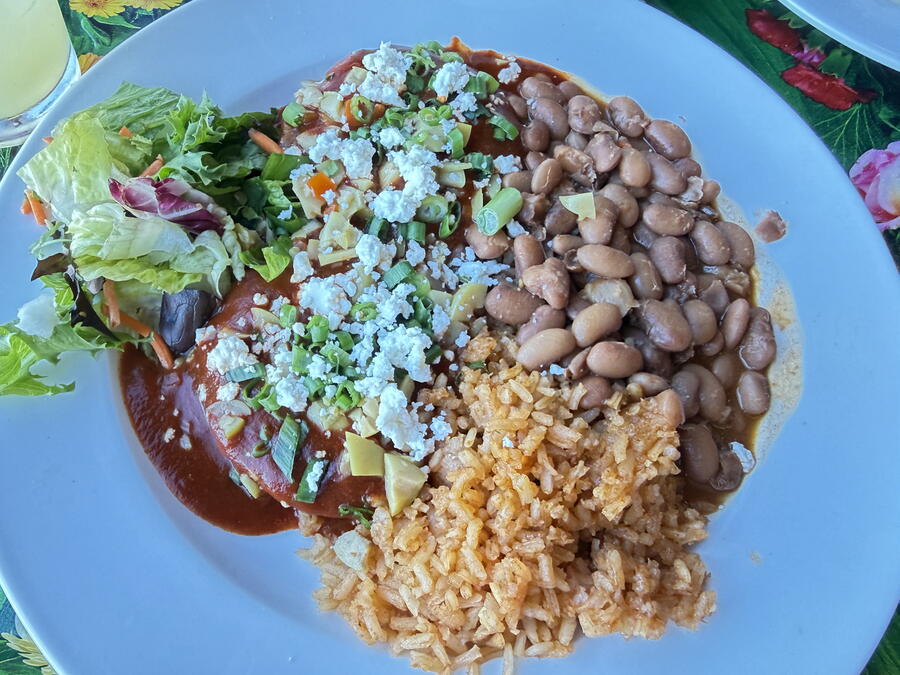
While RAS had a traditional combo plate of a chicken tamal, enchilada and soft taco, I decided to go for what I knew and also try something new. I ordered my local Arizona favorite, a green corn tamal, but I also sampled the enchilada Sonorense, which was the City of Gastronomy-certified dish. Red chile sauce, queso, onion and green olives topped two fried masa corn cakes, accompanied by charro beans and rice. We both agreed that the food here was superior to anything we had back home. For the food and the landscape, we would love to return to Tucson for a visit.